GEO, llms.txt and AI SEO: What Google Says a Local Business Actually Needs
A Korean agency pitched you a GEO or AEO package. Google's own guide says the work is still SEO. Here is what is documented, what is opinion, and what to ask before you pay.
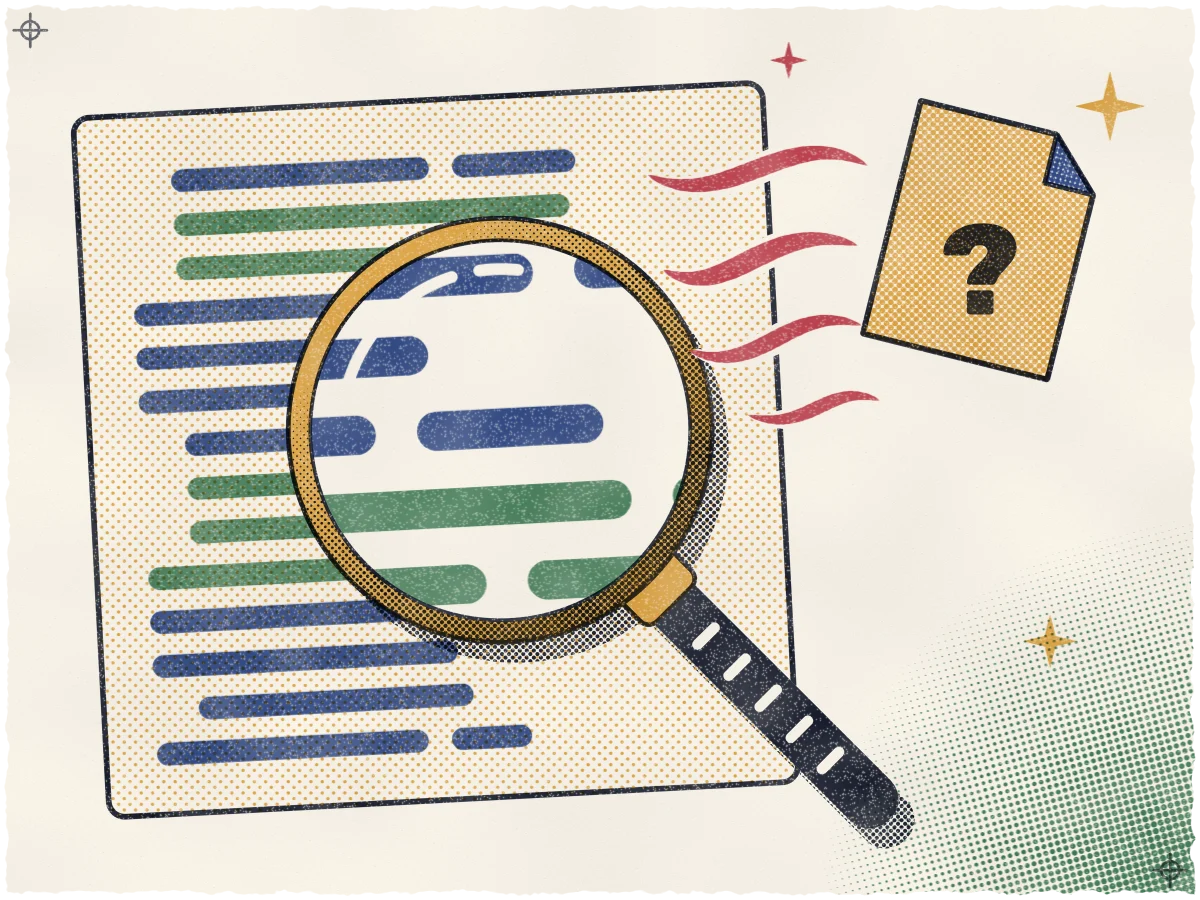
Is GEO different from SEO? Not in the work, according to Google. Its 2026 guide says optimizing for generative AI search is "still SEO," and that you do not need a special file, special markup or rewritten pages to appear in its AI answers. What does change is the goal and the scorecard: you want to be named inside an answer, not just listed among links, and that is harder to measure. If someone has pitched you a GEO or AEO package, read this before you sign.
This page sorts the claims from the evidence. For the bigger picture, see our guide to how AI assistants choose local businesses.
Why you are hearing about GEO
The theme is real, and big companies are chasing it. On August 5, 2026, the Korean outlet The Public reported that Lotte Department Store wants AI tools like ChatGPT to recommend it to foreign visitors. Lotte organized its store and benefit information in English, Japanese and Chinese in a form AI engines can read, and put up ads at Incheon Airport, in Hongdae and in Seongsu that nudge visitors to ask an AI about shopping in Seoul.
The article describes the effort. It reports no results. Still, when a department store treats AI answers as a place to compete, agencies notice, and the pitch reaches shops with one counter and one Google listing. Your situation is different, and so is the right spend.
Where "GEO" came from
The term comes from a 2023 academic paper, "GEO: Generative Engine Optimization," by Aggarwal and five co-authors, accepted to the KDD 2024 conference. The authors built their own test set, called GEO-bench, and reported that some content changes raised visibility in generative answers by up to 40% on that benchmark.

That is a lab result. It is not a measurement of Google, ChatGPT or any local business. The paper does not show that a Seoul cafe gains customers from any of its methods. A seller who quotes "40%" at you is quoting a benchmark, not your street.
What Google's 2026 guide says
Google published Optimizing your website for generative AI features on Google Search in May 2026. Search Engine Journal covered it on May 15 under a headline saying Google calls AEO and GEO "still SEO," and the page shows a last update of July 10, 2026. Here is what the guide itself says.
- It is still SEO. Optimizing for generative AI search is optimizing for the search experience, so the foundations of SEO still apply. Make pages for your customers, not just for AI.
- No AI text files. You do not need new machine-readable files, AI text files or special markup to appear in Google Search. That includes llms.txt, which Google Search ignores.
- No chunking, no special rewriting. You do not have to break pages into small pieces or write in a particular way for AI. Google says its systems understand pages that cover several topics, and understand synonyms.
- Structured data is not required. There is no special schema.org markup for AI features. Google still recommends structured data for ordinary rich results.
- Fake mentions are a weak bet. Google says chasing inauthentic mentions across the web is not as helpful as it might seem.
- Business Profile helps. Google says Google Business Profiles and Merchant Center can help your products and services show up in AI responses and other Search results.
One limit: the guide covers Google's AI features. It does not tell you how ChatGPT weighs anything. That gap is why the next sections separate what Google documents from what practitioners believe.
If a GEO offer depends on a file, a markup trick or a rewrite that Google's guide says you can skip, ask the seller to show you where any AI company documents it.
Do I need llms.txt?
No, and the file will not hurt. llms.txt is a plain text file some sites publish to summarize themselves for AI tools. Google's guide says keeping one will neither harm nor help your visibility in Google Search, because Google Search ignores it.
Google's John Mueller went further on the Search Off the Record podcast. Search Engine Journal reported on June 15, 2026 that he likened the file to a site's own sales pitch, which an LLM system by design cannot trust to tell one website from another. For discovery, he pointed back to normal HTML pages and internal links.
Mueller speaks for Google, not ChatGPT. Still, we know of no published test showing the file changes an AI answer, so a package that charges for it charges for a guess. If your web developer wants to add one, it costs little. Just do not pay a monthly fee for it.
What local search experts rate for AI visibility
Opinion, clearly labeled, is still useful. In Whitespark's Local Search Ranking Factors 2026, 47 local search experts rated what drives visibility in AI search. The survey was published in November 2025. It is a survey of opinions, not a test of any AI system.

The experts put presence on expert-curated "best of" lists first. A dedicated page for each service came second. Prominence on key industry domains came third. "Website content marked up in schema" came 44th.
Read that against the pitch. The top items are about being named by other sites and having a clear page for what you sell. They are not about files or hidden code. The best-of lists and the directories behind them are the subject of our guide to where a Seoul business should be listed for tourists. The page-per-service idea is in our English website guide.
Structured data is still worth having because it helps machines read your address, hours and phone number correctly, but that makes it an accuracy tool, not a documented AI lever; the same website guide covers how to add it.
Make sure AI crawlers can read your site
Google's guide says a page must be indexed and eligible to show in Google Search with a snippet before it can appear in Google's AI features, so a site that blocks crawlers by accident can't be quoted there. The English website guide shows how to check yours in minutes.
Three questions for anyone selling GEO
You do not need to be technical to test a pitch. Ask these.
- What exactly will you change? A good answer names pages, listings, profile fields and sites, and says why each matters. A weak answer says "optimize for AI," "add an llms.txt and schema" or "build mentions for you." Check it against what Google's guide says you can skip.
- How will you measure it? AI answers vary from one asking to the next, so one screenshot proves nothing. Ask how many questions they will test, from which locations, how often, and whether you can see the raw answers. Our guide to why AI recommendations change and how to measure them explains what a fair test looks like.
- What happens if the answers do not move? No one controls ChatGPT, Gemini or Google. Be wary of a guaranteed placement, a guaranteed mention or a guaranteed rank. A fair seller says what they will do next and when you can leave.
One more check. Some lists of "top GEO agencies" are published by an agency that ranks itself first. That is advertising, not a review. Look for who wrote a ranking before you trust it, and ask the seller for clients you can call.
What to do instead
The work that matters is the same work that mattered before AI chat: a complete Google Business Profile, accurate facts everywhere your business appears, a clear English page for each service, honest reviews with replies, and mentions on the sites that cover your neighborhood. If you want someone to do it, that is the work we describe under Be found and Be chosen. We treat AI answers as part of the same job, not a separate trick, and we cannot promise any ranking or recommendation. Our answer on guarantees is the same for AI as for Google Maps.
Before you pay anyone, see where you stand today. Say you run a hanbok rental near Gyeongbokgung. Ask ChatGPT, Gemini and Google for a hanbok rental near the palace, note whether they name you and which sites they cite, and treat it as a rough first look. For the maps, request our free visibility map: it shows where you rank across your neighborhood today, with no contract and no promise of a rank.
Sources
- The Public: Lotte Department Store uses GEO to reach foreign visitors (Korean, 5 Aug 2026)
- Aggarwal et al.: GEO: Generative Engine Optimization (arXiv 2311.09735)
- Google Search Central: Optimizing your website for generative AI features on Google Search
- Search Engine Journal: Google's New AI Search Guide Calls AEO And GEO 'Still SEO' (15 May 2026)
- Search Engine Journal: Google's Mueller Says llms.txt Can't Help LLMs Differentiate Sites (15 Jun 2026)
- Whitespark: Local Search Ranking Factors 2026