Beyond Google: How to Find the Listings and Best-Of Lists AI Assistants Cite for Your Seoul Business
Google and AI assistants read more than your Google profile when they describe a Seoul neighborhood. Here is how to find the sites that matter for your visitors, keep your details identical on them, and skip the rest.

Google and AI assistants do not rely on your Google profile alone. When they describe a neighborhood or list places to eat, they also read review platforms, travel guides, directories, local press and "best of" lists. Which of those sites matter depends on your business and on where your visitors come from. So the method is to find the sites that show up for your visitors' searches, make your details identical on them, and ignore the rest. This guide is part of our look at how ChatGPT, Gemini and Google's AI pick local businesses.
As of October 12, 2026, we have not published counts from our own Seoul prompts yet, so every number below comes from vendor research, and none of it is about Korea. Read it as background, then test your own market with the steps below.
What a listing is, and why matching details matter
A listing, also called a citation, is your business name, address, phone number and hours on a site you do not run. A Tripadvisor page is one. So is a hotel-booking site, a district tourism directory, or a travel blog's "where to eat near Gyeongbokgung" post. Practitioners split citations in two. A structured citation is a directory entry with fields to fill in. An unstructured one is a mention in an article, a forum thread or a social post.
Whitespark's May 2026 guide to Google's AI Mode says AI Mode depends heavily on unstructured citations such as blogs and news, and that accurate, consistent business details across sites could limit its mistakes. That is a practitioner's observation, not a statement from Google. Its own example of a mistake is AI Mode quoting a previous tenant's policy for a restaurant. If you renamed, moved or changed your hours, old listings keep telling the old story.
Google's own help page is less specific. It says prominence rests partly on "how many websites link to your business", and it says nothing about matching details across directories. Treat consistency as sound practice, not a known ranking rule.
Pick one English name and one address
Choose one romanization of your business name and one road-name address, and use them on your website and on every listing. Our guide to choosing one name for your Google profile, Hangul or English, covers the profile. This section covers the English spelling you use everywhere else.
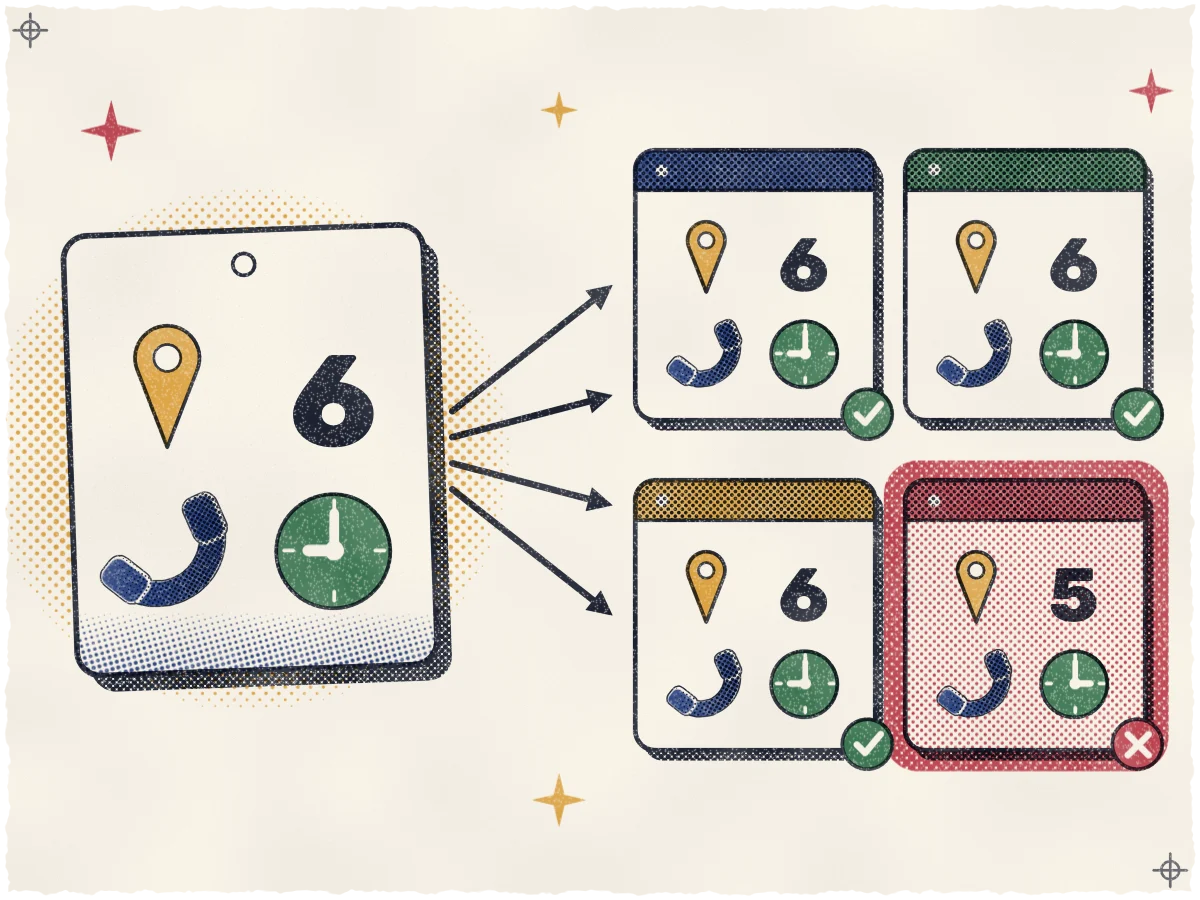
Korean apps make this harder than it looks. The Korea Times reported in April 2025 that many foreign users struggle to find places on Naver Map or Kakao Map when searching in English, and that results are inconsistent. Kakao told the paper that English place names and location details may not be standardized, and that it corrects errors when users report them. If English data varies even inside Korean apps, every site you control should at least agree with itself.
Say you run a café at 테헤란로79길 6. Decide the exact strings once, write them in a note, and copy from it:
- Name: one spelling, with the same accents and hyphens every time. "Café Haneul" and "Cafe Haneul" are two names to a machine.
- Address: the road-name form, for example 6 Teheran-ro 79-gil, Gangnam-gu, Seoul, with the same floor or unit wording each time.
- Phone: the same format everywhere, ideally with the country code, such as +82 2 1234 5678. Drop the leading 0 after +82.
- Hours: identical on all sites, including your closures for Seollal and Chuseok.
- Website: one address, the English page you want visitors to land on.
Put them on your English website and your Google profile first, word for word, and copy every other listing from that note. Apple lists its brand and location tools, which manage how a business appears on Apple Maps, as unavailable in South Korea. That is why our guide to what you can and can't control on Apple Maps comes back to keeping your details identical everywhere, since Apple does not say where its Korean listings come from.
What AI cites, according to vendor studies
Three recent studies counted the sources AI answers cite for local questions. All three come from companies that sell tracking or listings.
| Study | What it counted | What it found | Caveat |
|---|---|---|---|
| BrightLocal, Sept 2026 | About 200,000 prompts on ChatGPT, Google AI Mode and AI Overviews; about 1.97 million citations | Business websites 42% of citations, Google Business Profiles about 28.5%, Yelp about 9.5%. All three platforms cited Yelp. BrightLocal says ChatGPT's ties to Yelp and Bing make it surface slightly different businesses, and gives no Bing figures. | Sells local tracking. Its sample figures differ slightly between sections, and its examples are US cities. |
| Local Falcon, Sept 2026 | 998 US hotels on ChatGPT, Gemini, Google AI Mode, AI Overviews and Google Maps | 99.7% of AI Mode citations went to Google-owned pages. ChatGPT cited booking sites most (34.6%), then review platforms (29.3%, led by Tripadvisor). Booking sites took 69.2% of Gemini's citations. Hotel websites got 6.9% of ChatGPT's citations and 7.9% of Gemini's. | Sells rank tracking. US hotels only. |
| Yext, Oct 2025 | 6.8 million citations from 1.6 million responses on Gemini, OpenAI and Perplexity | Brand websites 44% of citations, listings 42%. | Sells listings. Does not state the region of its data. |
The counts do not line up because each study sorts sources differently. In BrightLocal's and Yext's counts, business websites take the largest share, and BrightLocal puts Google profiles second. Hotels are different. In Local Falcon's study, Google's AI Mode cited Google's own pages almost exclusively, while ChatGPT and Gemini cited booking sites far more than hotel websites, and ChatGPT also cited Tripadvisor heavily. In BrightLocal's study, all three platforms it tested cited Yelp. For most businesses the work in our guides on your website and profile comes first, but if you run lodging, check your booking-site listings early.
Do not assume US sites matter in Seoul
Perplexity announced in March 2024 that it would show Yelp data for local searches, mostly restaurants and cafés. The article does not say which countries it covers. We have not verified the current arrangement, how well Yelp covers Korean places, or how often assistants cite it for Seoul questions. The same goes for Tripadvisor. Travelers know it well, but we have not measured how often AI answers cite its Seoul pages.
So check, do not guess. A first list to test might hold Tripadvisor, the hotel-booking sites your guests use, English travel blogs about your area, and Visit Seoul, the Seoul Tourism Organization's English site. Search your business name and address on each. If you are missing or wrong, that is only a gap worth closing if assistants cite that site for your visitors' questions. The steps below tell you whether they do.
"Best of" lists and local press
Practitioners rate being named on expert-curated "best of" lists as the top AI visibility factor, in an expert opinion survey we cover in our guide to GEO, llms.txt and what isn't worth paying for. It is opinion, not a Google rule, but it fits how assistants quote lists when they answer "best X in Y".
A small shop can earn a mention without buying one. Find the writers and editors who already cover your neighborhood in English. Say you run a hanbok rental near Gyeongbokgung: look for travel bloggers, city guides and newsletters that write about the palace area. Send a short factual sheet with your English name, address, hours, what you do best and a few photos. Invite them in. Let them write what they think. Do not pay for placement, and do not ask for a say in the text. If a list sells spots, that is advertising, and you should judge it as advertising.
Expect slow results. Whitespark's founder, in the same survey, calls this easier said than done, since these lists try to stay unbiased.
How to find the sites that matter for you
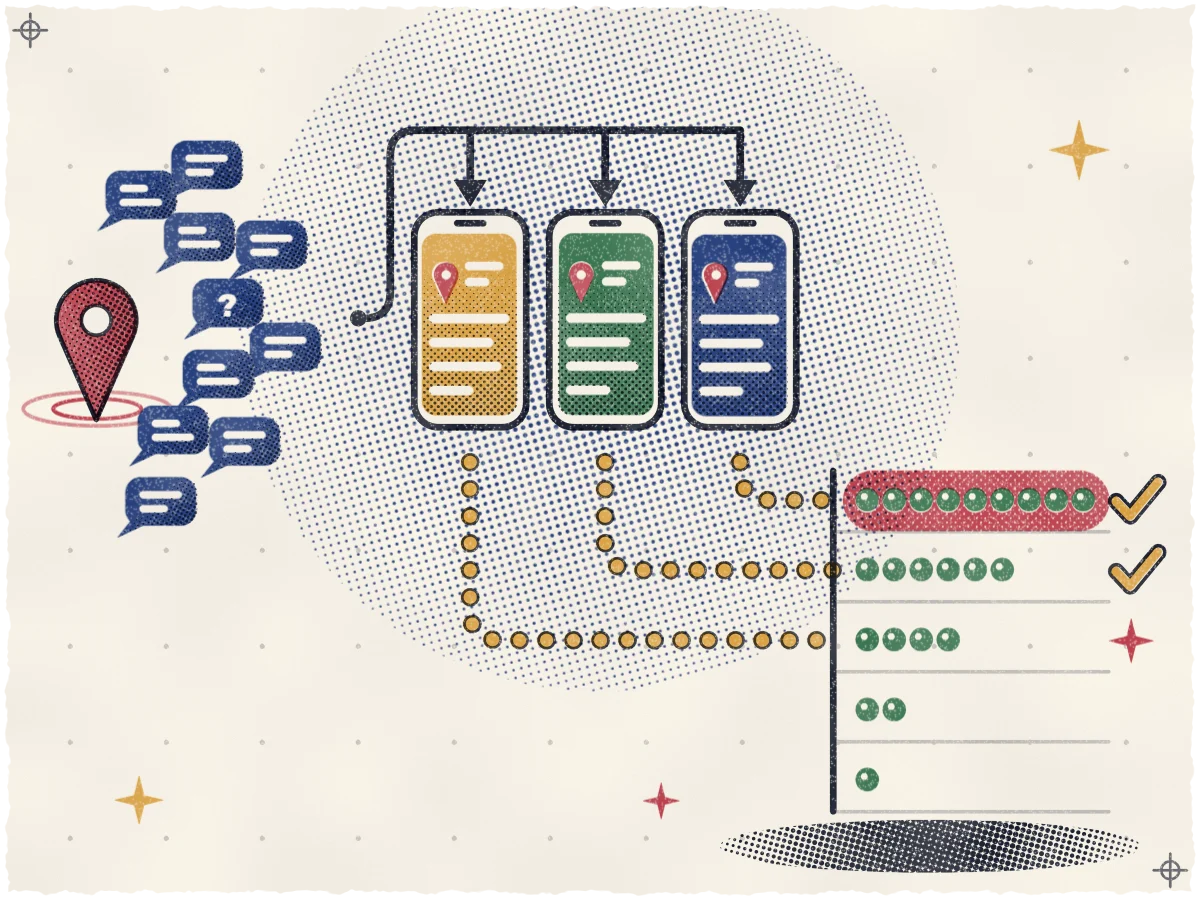
- Write your visitors' questions. Ten is enough: "hanbok rental gyeongbokgung", "vegan restaurant hongdae", "Is there a skin clinic in Gangnam with English-speaking staff?"
- Search each one on Google in English. Use a private window. Note every site that is not Google or a competitor's own website, and every source shown under an AI answer.
- Ask the assistants. Put the same questions to ChatGPT, Gemini and Google's AI Mode, and note the sites they cite. Whitespark also suggests asking ChatGPT and Gemini which sites they think matter. Repeat each question a few times, because answers change between runs. Our guide on checking which sites AI cites about you explains why and how to log it.
- Tally the domains. List each site with a count of how often it appeared, whether you are on it, and whether your details there are correct.
- Work from the top. Fix wrong details on the most-cited sites first, then add yourself where a listing is free and real. Revisit the list every few months.
If you would rather not run this by hand, we do it as part of getting you chosen. We record which sites AI cites for searches in your neighborhood and send you a ranked list of where you need to be listed.
What to skip: mass directories and backlink packages
Skip paid mass-submission services and backlink packages. In Whitespark's 2026 opinion survey, two experts named mass-posting citations on low-traffic sites and buying citations in bulk as tactics that no longer work. Views on directories in general are split. One expert said ChatGPT's reliance on long-tail directories has dropped sharply. Whitespark's founder said AI answers still cite surprising directories once seen as low value, and that he is reconsidering broad citation distribution. Both views argue for the same habit: measure what is cited in your market.
There is also a plain cost. A hundred listings are a hundred places to fix when your phone number or Chuseok hours change. None of the studies above tests whether bulk backlinks help AI answers.
Keep Naver current yourself
Your Korean customers still find you on Naver, so keep your Naver Place page current yourself. Use the same phone and hours as everywhere else, and update holiday hours there too. We do not manage Naver listings.
See where you stand today
Start with what you can see. Our free visibility map shows where your business ranks on Google Maps today, street by street. It is a starting point, not a promise of rank, and it shows you where to spend time first.
Sources
- Whitespark: Guide to Google's AI Mode for Local Businesses (May 22, 2026)
- Google Business Profile Help: Improve your local ranking on Google
- The Korea Times: Local maps gain popularity but leave foreigners unsatisfied (April 18, 2025)
- Apple Support: Apple Business feature availability
- BrightLocal: Local AI Visibility Study (September 16, 2026)
- Local Falcon: The Hotel AI Visibility Index (September 17, 2026)
- Yext: AI citations, 86 percent of sources are brand-managed (October 9, 2025)
- Maginative: Perplexity enhances its AI search engine with direct Yelp data integration (March 12, 2024)
- Visit Seoul, the Seoul Tourism Organization's English site
- Whitespark: Local Search Ranking Factors 2026 (expert opinion survey, November 6, 2025)