Review Events, Discounts and Paid Reviews: What Google Bans and What It Allows
A free drink for a review feels harmless. On Google it counts as fake engagement. Here is what to avoid, and what you can do instead.
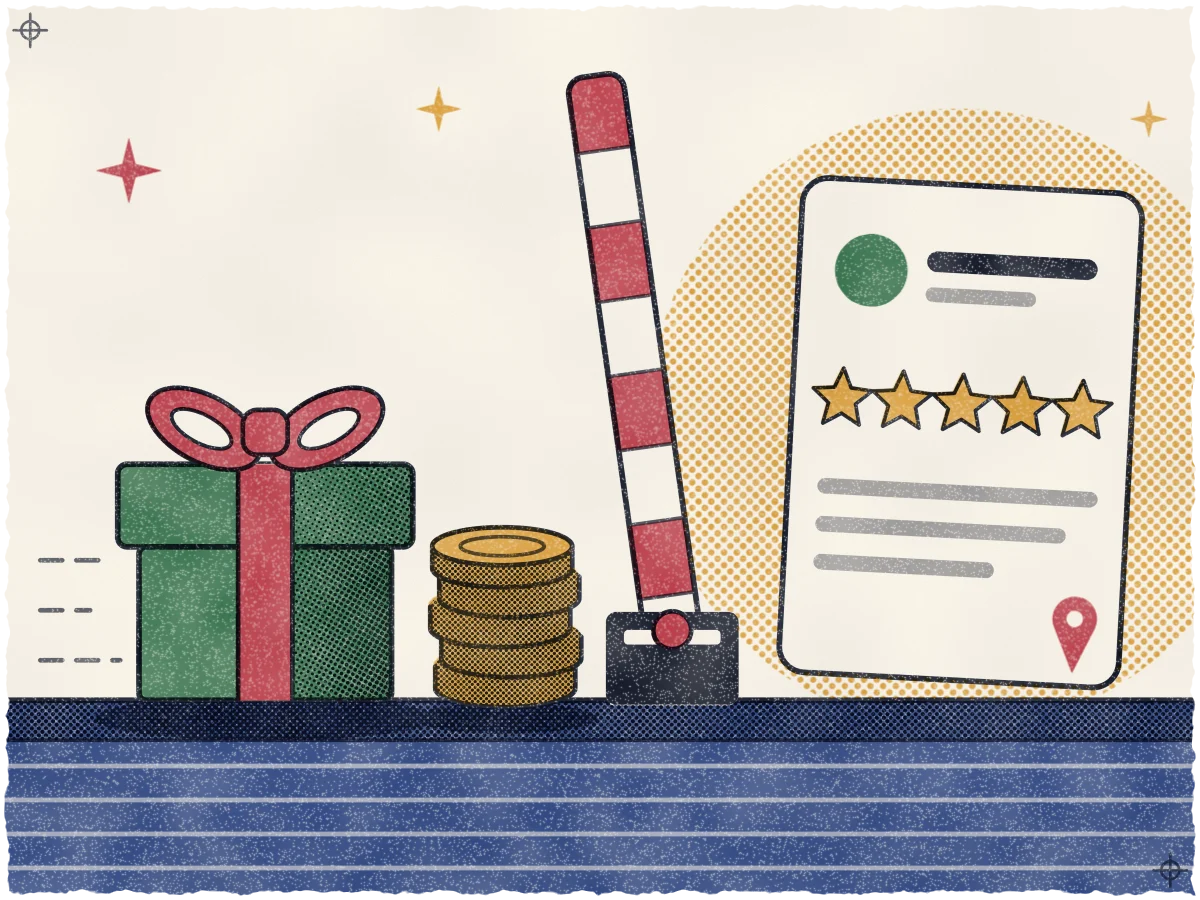
No. Do not offer a discount, a free drink, a free side dish or anything else of value for posting, changing or removing a Google review. Google's review help calls such offers fake and misleading content and says they are strictly prohibited. It does not matter whether the reviewer writes honestly, or whether the review is good or bad. The same page says a mix of positive and negative feedback often feels more trustworthy to customers.
Below are the review tactics Google bans that a shop or restaurant is most likely to run into, in plain words, and what to do instead. It is part of our guide to Google reviews from foreign visitors.
Google's list, in plain words
The rules sit in Google's Maps contribution policy, under fake engagement and rating manipulation. Its starting point is that a review should reflect "a genuine experience at a place or business." The page shows no revision date, so read the live text before you act. As of this guide, it bars all of the following.
- Paid reviews. Reviews "paid for, directly or in kind." A free dessert counts as in kind.
- Incentives. Payment, discounts, free goods or services in exchange for posting any review, or for changing or removing a negative one.
- Several accounts. Content posted from multiple accounts by, or at the request of, one person.
- Conflicts of interest. Reviews from people tied to you. The policy's examples include current or former employment, competitors and family.
- Asking only happy customers. Merchants may not "selectively solicit positive reviews." This is review gating: a survey or a chat first, and the Google link only for guests who said they were pleased.
- Discouraging negative reviews. Asking guests not to post a complaint falls here.
- Requiring or pressuring a review on the premises. Standing at the table until the phone comes out is pressure.
- Staff quotas. A target such as "three reviews per shift" is out.
- Scripts and staff names. You may not tell guests what to write, or ask staff to collect reviews that name a staff member.
What Google allows is asking. Its help page says you can ask customers to visit a Google link or scan a QR code, and the policy allows asking for reviews of a genuine experience as long as you offer nothing in return.
The free side dish for a review
Say you run a Korean BBQ near Myeongdong. A table of four finishes dinner, and your server says: post a Google review, show me the screen, and the naengmyeon is on the house. The guests write five honest sentences. Is that fine?
On Google, no. The rule turns on the offer, not on what the reviewer writes. The policy bans incentives for posting any review, so honest text does not clean up a deal. The same goes for 10% off the next visit, a free coffee at the counter, a bottle of soju, or a hanbok rental extended by 30 minutes if you run a shop near Gyeongbokgung.
The ban also runs the other way. Say a guest leaves one star and you message them a refund if they delete it. That is an incentive to remove a negative review, and the policy names it.
Giving things away is part of Korean hospitality, and nothing here asks you to stop. The line is the link between the gift and the review. Give the extra dish because the table was lovely, say nothing about reviews while you do it, and keep the two apart. This page covers Google only. Other platforms have their own rules, so read those before you offer anything there.
A quick test: if anything of value changes hands because of a review, or if who gets asked depends on how happy they are, stop.
Review packages, guarantees and "ask a friend"
Two shortcuts tempt Seoul owners, and both run against Google's policy, even when a seller says its work follows Google's guidelines.
The first is the review package. Listings on Korean freelance marketplaces sell Google Maps reviews and ratings in packages, with a refund if agreed targets are missed, a redo if reviews get hidden, and a full refund if abuse or low-quality cases occur. Some recruit reviewer groups (체험단) who are paid something to visit and post within a set window, with an ad label. The label does not change Google's rule: a review paid for in cash or in a free meal is still a paid review. The second sounds harmless: ask a foreign friend to post a review in their language.
Both carry the same risk, and you carry it, not the seller or the friend. A refund guarantee is a promise from the seller. Google is not a party to it, and no seller controls how Google reads a batch of new reviews. The policy says incentivized reviews will be removed from Maps, so you can pay and still watch the reviews disappear. A friend's review fails for a simpler reason. If the friend never ate at your place, the review is not a genuine experience. If they did, a personal tie to you is the kind of link the policy treats as a conflict of interest.
No one can promise a Google ranking either, and our FAQ says so plainly. The Creativv does not buy reviews, sell them or guarantee positions.
What Google does when a pattern looks wrong
The policy treats "unusual volumes or patterns of review contributions" as rating manipulation. Incentivized and biased reviews are not allowed and are removed. If the posting accounts cause harm, the policy says Google may act against them, from suspending account privileges to closing the account.

Your listing is exposed too. Google's page on Business Profile restrictions says that if it finds a business broke the fake engagement policy, it may do more than remove the reviews. It may stop the profile from getting new reviews for a set time, hide its existing reviews for a set time, or show visitors a warning that fake reviews were removed. Google says it emails the owner when it plans a restriction, and the owner can appeal. Its Business Profile guidelines also say Google can suspend a profile that breaks its rules. Our guide to Google Business Profile in Korea covers what else can get a profile suspended.
Korean law, US law and clinics
Korea has its own rules on paid endorsements. The Fair Trade Commission publishes guidelines on endorsement and recommendation advertising (추천·보증 등에 관한 표시·광고 심사지침). This page does not cover them. Before you pay anyone for a review, a post or a mention, read the current text or ask a Korean lawyer. Whatever Korean law allows, Google's rules still apply.
For comparison, the US Federal Trade Commission's Consumer Reviews and Testimonials Rule, in effect since October 21, 2024, bans fake reviews, paying for reviews that must be positive or negative, and review suppression. That is US law. Google's line is tighter, since it bans incentives even when no sentiment is required.
Clinics face one more layer. Korea's Medical Service Act limits how clinics market treatment experiences, so ask a Korean lawyer before you collect or share patient stories, and skip before-and-after posts and discounts for reviews.
What to do instead
Ask every guest the same way, and give nothing for it. Put your Google review link or QR code on the receipt, the table card or the bill folder, so a visitor can leave a review from the airport. Our guide to getting Google reviews from foreign visitors shows where and when to place it for a short trip.
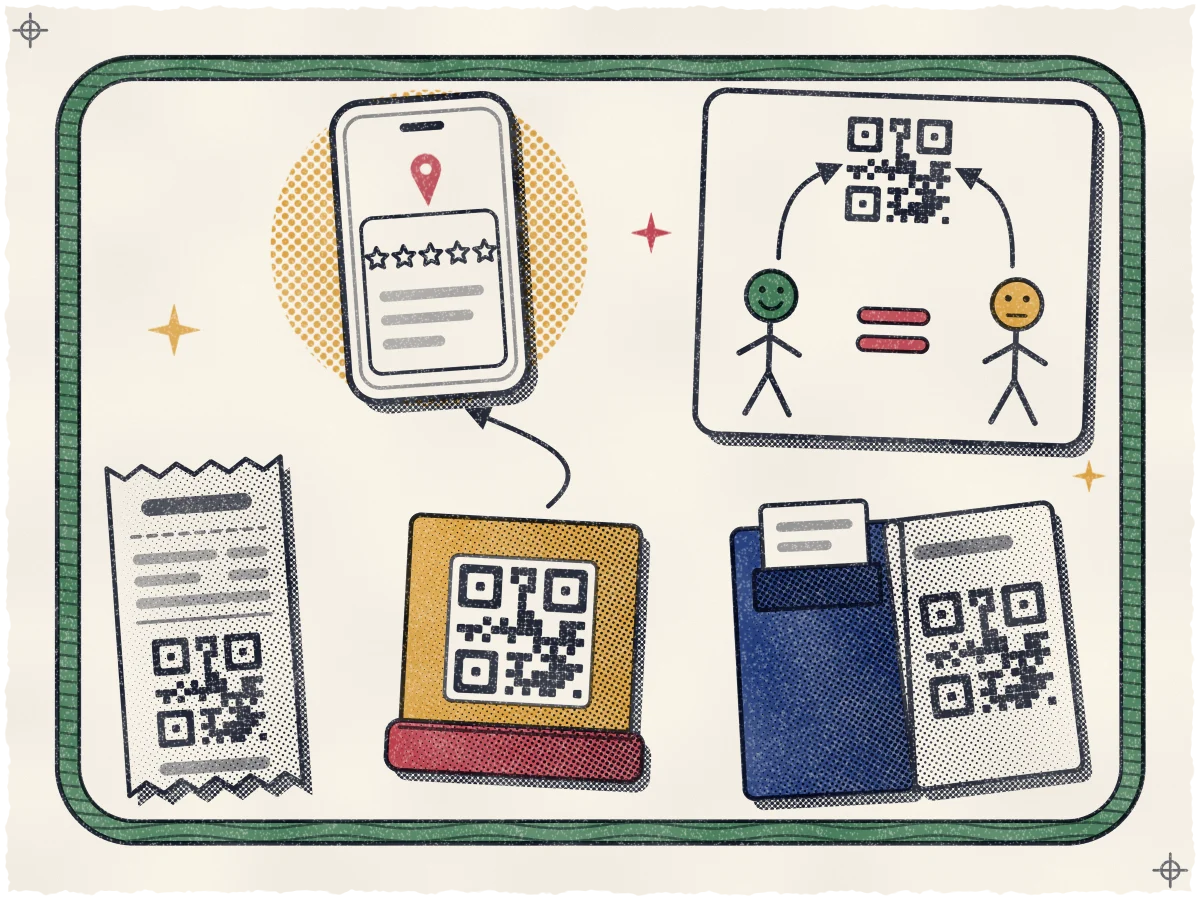
Can you ask staff to get reviews? Yes, within limits. Staff can hand over the card and say the link is there. Treat all guests alike, set no target, give no script, and do not ask guests to name a server.
When a bad review lands, do not bargain. If it breaks Google's content policy, you can flag it. If it only stings, answer it calmly in public, as we show in our guide to replying to Google reviews in English. Then fix what the review named, such as an English menu or the weekend wait. That is the honest way to raise your stars.
If you would rather not run this yourself, we reply to every new Google review in natural English and give you a direct review link, part of how we help visitors choose your place.
See where you stand today
Before you spend on reviews, see what a visitor sees. Our free visibility map shows where you rank on Google Maps across your neighborhood today. It is a snapshot, not a promise about where you will rank.
Sources
- Google Business Profile Help: Tips to get more reviews
- Maps User Generated Content Policy Help: Prohibited and restricted content
- Google Business Profile Help: Guidelines for representing your business on Google
- US Federal Trade Commission: Consumer Reviews and Testimonials Rule, Questions and Answers
- Google Business Profile Help: Business Profile restrictions for policy violations
- Shin & Kim newsletter: KFTC guidelines on endorsement and recommendation advertising (Korean)
- Korea Law Information Center: Medical Service Act, Article 56 (Korean)