Google Reviews for Korean Businesses: Earning, Answering and Protecting Reviews from Foreign Visitors
A visitor who has never walked past your door has your reviews and your replies to go on, and Google reads the same signals. Here is how to earn reviews during a short visit and stay inside Google's rules.

A traveler who has never walked past your door has two things to go on: your Google reviews and what you wrote back. Google reads the same reviews when it decides whom to show. So reviews do two jobs at once, and most owners handle neither on purpose.
This guide covers why reviews weigh so much for visitors to Seoul, what the numbers say, what Google allows when you ask for reviews, and how to read the reviews you already have. Each step has its own guide, linked where it comes up.
Why reviews weigh so much for visitors
Your Korean regulars found you through a friend, a street or a Naver post. A visitor from Singapore has none of that. She has a phone, a few minutes and a list of places she has never heard of. Star ratings and written reviews from other strangers are the only evidence she can check. This is the pattern we describe in how foreign visitors find and choose businesses in Korea: the choice happens on your listing, and reviews carry much of it.
Google counts them too. Its help page says local results rest mainly on relevance, distance and popularity, and it covers the third under the heading prominence. Prominence means how well known a business is, and it depends partly on how many reviews you have. In Google's words, "More reviews and positive ratings can help your business's local ranking." Google does not say how much reviews weigh against everything else, and it says there is no way to pay for a better local rank. Why your Google Maps rank changes every few blocks shows where reviews fit among the other factors.
What visitors can see
Reviews on a Google listing are public, but a recent report says reading them may now take an account. On September 30, 2026, Search Engine Roundtable reported that Google Maps asks signed-out users to sign in before they can see all the reviews on a listing, sort them or leave one. The report carried no statement from Google, and it did not say where or for whom the change applies.
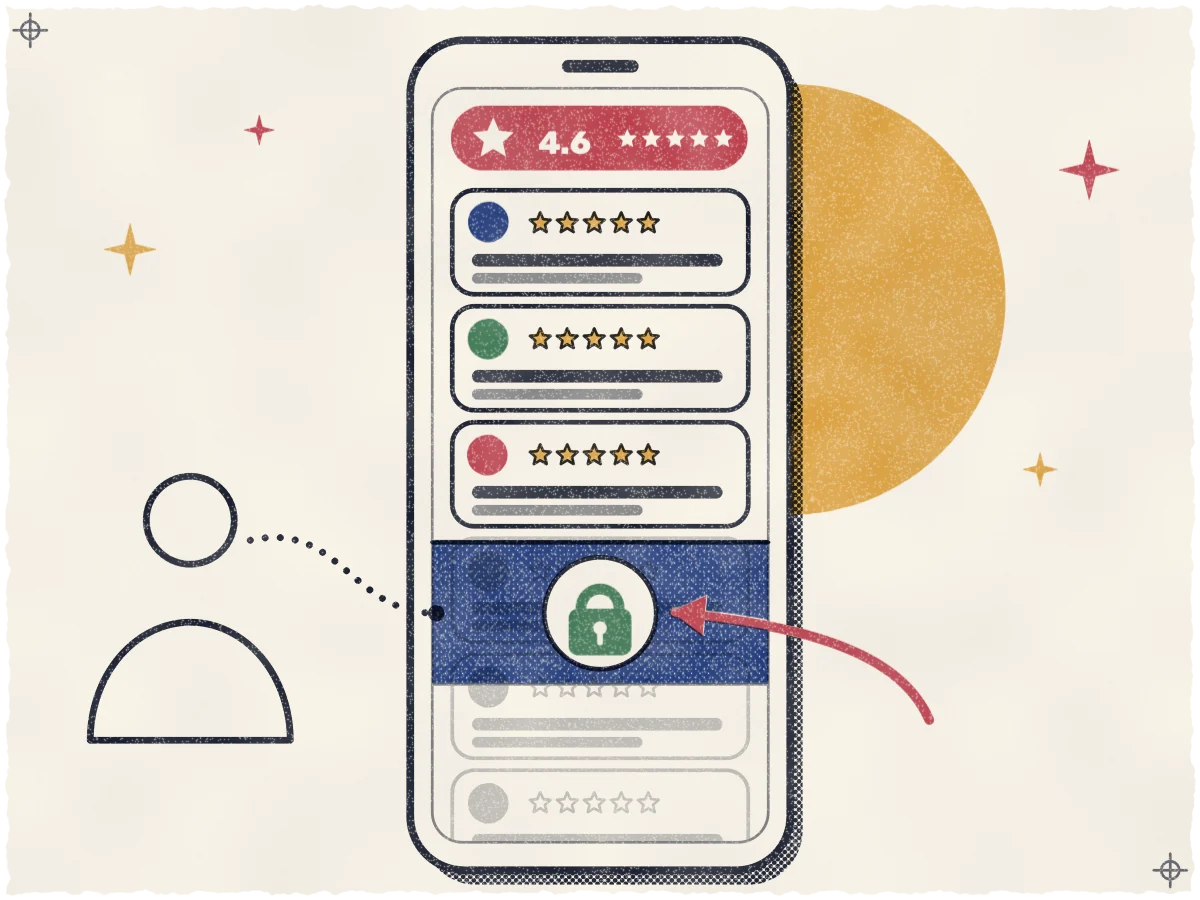
So check your own listing. Open it on your phone in a private browser tab, signed out, and try to scroll past the first reviews. If a sign-in prompt appears, the first few reviews and your star rating are doing even more of the work, because some visitors will stop there.
Writing a review needs an account either way. Google's review help says customers "must be signed into a Google Account to leave a review." Plan for that when you ask.
What the data says about review readers
BrightLocal surveyed 1,002 US adults for its Local Consumer Review Survey 2026, published February 11, 2026. These are Americans, not visitors to Korea, so read the figures as a sign of how people shop with reviews, not a count of your customers.
| Finding | Share of US adults |
|---|---|
| Read reviews for local businesses | 97% |
| Expect owners to respond to reviews | 89% |
| Look for reviews written in the last three months | 74% |
| Read AI-generated review summaries | 82% |
Three things follow for you. A reply is part of what people expect to see. A review from last spring does less work than one from last week, so you need a steady trickle, not one burst. And when a summary sits above your reviews, a visitor may take in the gist before reading any single one, so the themes that repeat matter most.
The same survey found that templated or generic replies make half of consumers unlikely to choose a business. "Thank you for your review!" pasted under every review costs you. How to reply to Google reviews in English shows what to write instead.
AI reads reviews too, but people still check
BrightLocal's March 2026 follow-up found that 45% of US adults use AI tools for local business recommendations. Of those users, 97% sometimes double-check an AI pick against real reviews. People ask an assistant, then open the reviews to see if they agree. Weak or stale reviews can undo a good AI answer.
Whether assistants draw on Google reviews for places in Korea is less clear, and we won't claim it. Google's developer tool for grounding answers in Maps data, covered in the Gemini section of our AI guide, launched in September 2025 with review-based answers for the United States and India only. Its documentation, updated October 9, 2026, calls it globally available but warns it may not be available in all regions, and it does not say which countries' reviews it uses. That is a tool for developers, not a window into how ChatGPT or Gemini rank your shop. For what we do know, read how ChatGPT, Gemini and Google AI pick local businesses.
Getting reviews during a short visit
Foreign visitors stayed 6.5 days on average in 2025, according to a Bank of Korea report covered by The Korea Times. A guest who loves her Tuesday dinner is on a plane by the following Monday, and the urge to write about it fades fast. Waiting for reviews to arrive on their own gives you a thin, uneven trickle.
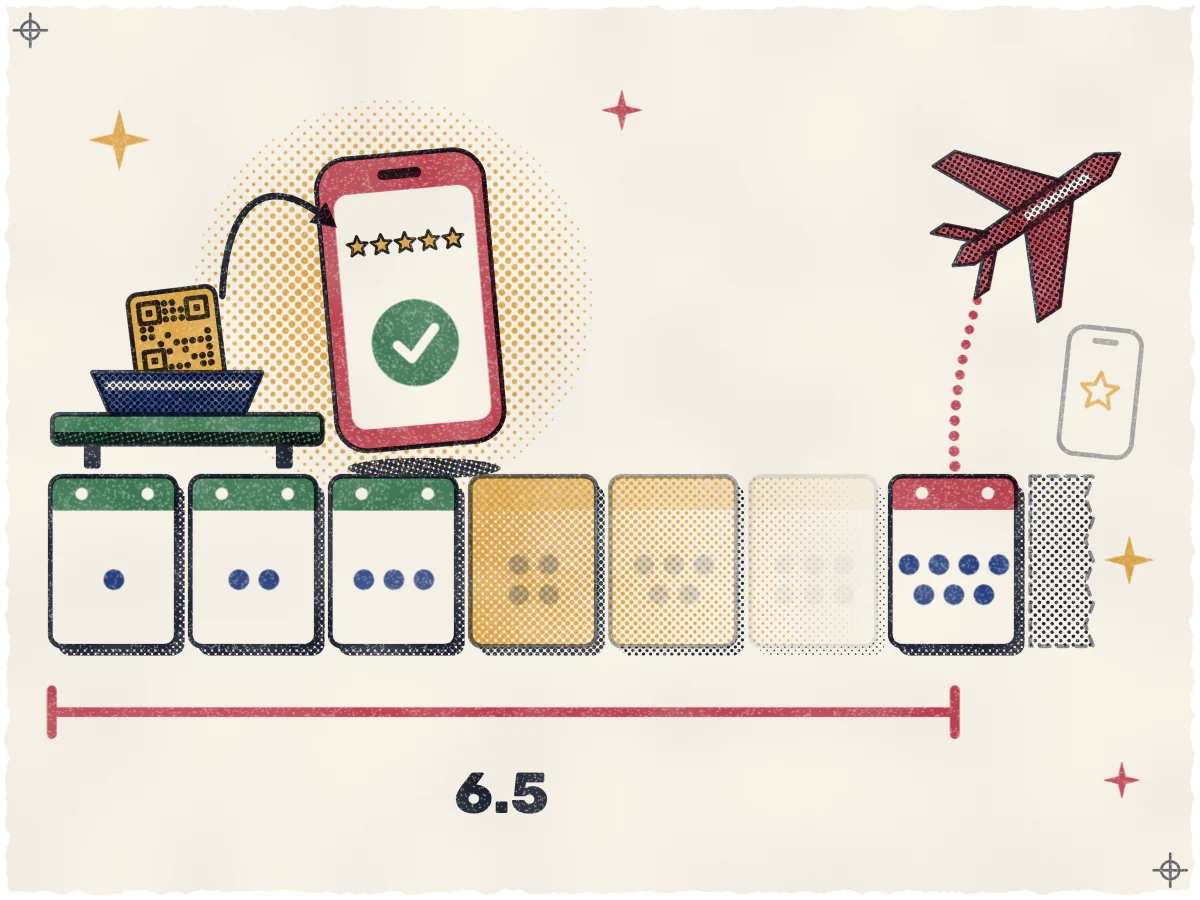
So the ask has to happen during the visit, and it has to be easy. Google's review help says you can ask customers to visit a Google link or scan a QR code. Put it on a card in the bill tray, at the pickup counter or at the hanbok return desk, with one plain line in English such as "Your Google review helps other travelers find us." Hand it over and step away. Google bars pressure on the premises, so read the rules section below before you print anything. The full routine, with placement for a BBQ restaurant, a café, a hanbok rental, a guesthouse and more, is in getting more Google reviews from visitors.
Ask every customer the same way, with a link they can use later. A visitor who finds your card in their bag at the airport is still a visitor you can reach.
Replying to reviews in English
Visitors read your replies as closely as the reviews. Google's review help asks owners to be professional and polite, keep replies brief, and not use replies to offer deals or promotions. Rather than send the same thank-you to everyone, it suggests focusing on reviews where you can share an update or answer a question. Say you run a café in Seongsu and get two reviews in one week. One gives five stars and praises the rooftop. The other gives three stars: great coffee, but the menu was Korean only and the wait ran twenty minutes. Both deserve an answer. The first gets a short thanks that names the rooftop. The second gets a calm line that names the problem and says what you changed.
Write for the next reader, not the reviewer. A reply shows a stranger how you behave when something goes wrong, which can count in your favor even under a bad review. Our guide to replying in English gives examples for five-star, mixed and one-star reviews, and for the cases Seoul businesses meet most: the English menu, the wait, prices, a booking mix-up and a Chuseok closure.
If you would rather not write them yourself, this is work we do. We reply to every new Google review in natural English, in your voice, as part of making your business the one visitors choose.
What Google bans in review requests
The banned acts can look like plain kindness. Say you run a pork belly place near Hapjeong. A couple from Manila finishes dinner, and you want to thank them. You bring out a free soju or an extra side dish and, in the same breath, point to the review card. It feels like hospitality. To Google it is an incentive, and the review it buys counts as fake engagement. A gift given to everyone, with no review attached, is a different thing. The trouble starts when the two travel together.
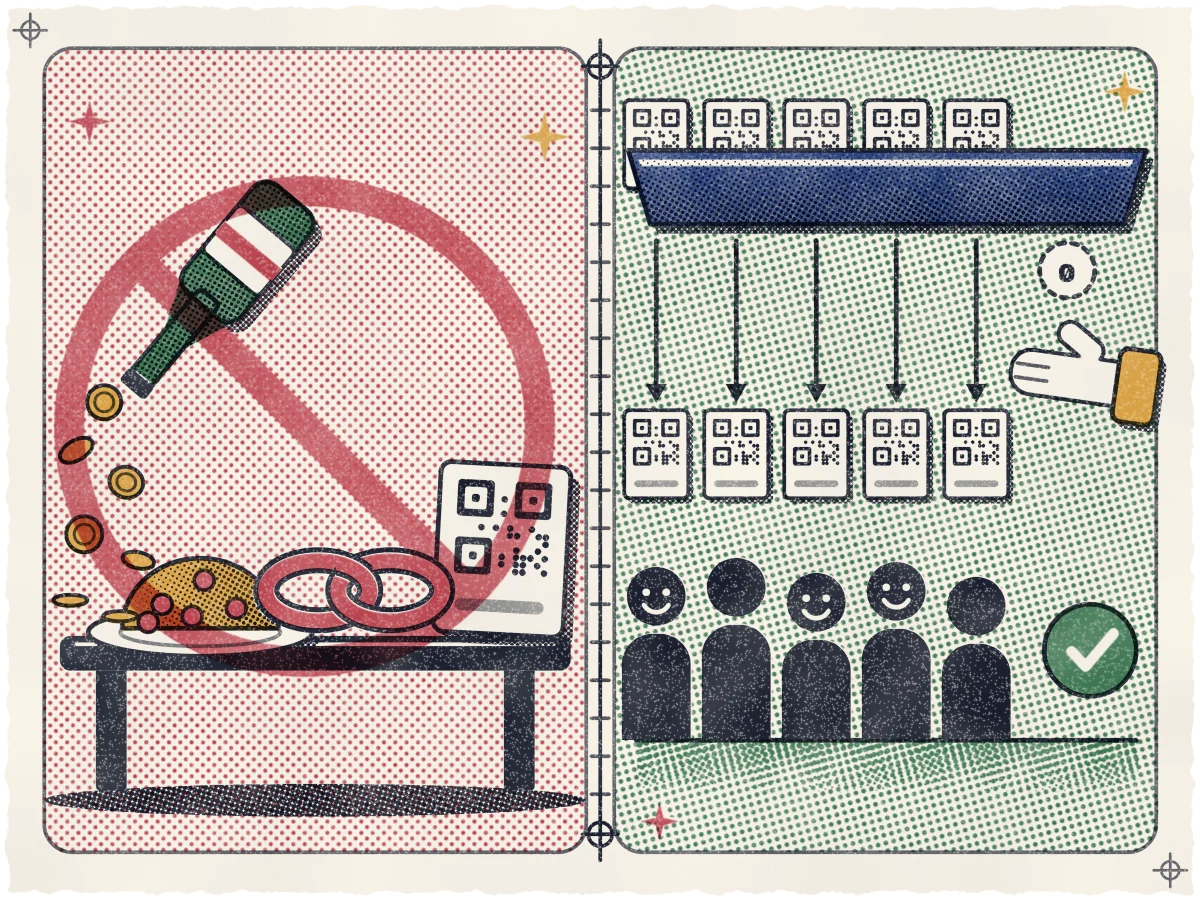
We re-read Google's Maps contribution policy on October 12, 2026. The page shows no revision date, so check it yourself before you rely on this summary. It bars merchants from offering incentives "such as payment, discounts, free goods and/or services" in exchange for a review. It bars them from discouraging negative reviews or selectively soliciting positive ones, which rules out asking only the guests who look happy, or sending unhappy guests to a private form while happy ones get the Google link. It says merchants "should not require or pressure users to leave ratings or write reviews while on the premises, nor should they request that specific content be included." It does allow you to ask for reviews of a genuine experience, as long as you offer nothing for them and don't try to steer the rating or the words.
Two more lines cover staff. Merchants may not ask staff to collect a set number of reviews, or reviews with specific content, including content that names a staff member. A trade outlet reported that Google added those lines in April 2026. So no monthly quotas, and no bonus for a server whose name shows up in reviews.
Google's review help says offering incentives "like free or discounted goods or services" for reviews "is strictly prohibited." The safe line: ask everyone, ask the same way, give nothing back for it, and never touch what they write. What Google bans in review requests goes through the common cases, including the question owners ask most: is a discount ever allowed?
Reading your reviews for patterns
Once you have a few dozen reviews, read them as a set, not one at a time. Make two lists. In the first, write what visitors praise: the broth, the view, the friendly grandmother at the counter. In the second, write what costs stars. For Seoul businesses serving visitors, four complaints are worth checking first: an English menu that is missing or confusing, the wait, the price against what the visitor expected, and the staff, where the cause may be a language gap more than rudeness.
Count how often each item appears in the last six months. Then fix the top one. An English photo menu, a posted wait estimate, prices shown at the door: each is a small fix aimed at a common complaint. Put what visitors praise into your photos and your listing description, in the words they use.
Reviews in other languages
Most visitors to Korea are not native English speakers. China, Japan and Taiwan send the most, as our visitor overview shows, so expect reviews in Chinese, Japanese and more alongside the English ones.
Our service writes the English replies. Whether to also reply in Japanese or Chinese is your call. A short, accurate reply beats a long one with errors, so do it only when you or someone on your staff reads the language well enough to trust it. A one-line thank-you in the reviewer's language, followed by the English reply, is plenty. When in doubt, reply in English and keep it simple.
See where you stand today
You now know what a visitor sees, what Google counts and what it bans. The next step is to see how your listing looks against the businesses next door. Request a free visibility map and we'll show where you appear today in your neighborhood for the searches visitors type, and where the openings are. It makes no promise about rank, because the platforms decide that. It shows your starting point, and it's free, with no contract.
Sources
- Google Business Profile Help: Tips to improve your local ranking on Google
- Search Engine Roundtable: Google Maps Now Requires Sign In To Read All Reviews & More, September 30, 2026
- Google Business Profile Help: Tips to get more reviews
- BrightLocal: Local Consumer Review Survey 2026 (February 11, 2026)
- BrightLocal: How much do consumers trust AI for local recommendations? (March 10, 2026)
- Google Developers Blog: Grounding with Google Maps is now generally available, September 26, 2025
- Gemini API docs: Grounding with Google Maps (last updated 2026-10-09)
- The Korea Times: Foreign spending accounts for 1.17% of Korean GDP in 2025 (Bank of Korea report), August 5, 2026
- Maps User Generated Content Policy Help: Prohibited and restricted content
- PPC Land: Google tightens Maps review policy, staff names and quotas now banned, April 2026